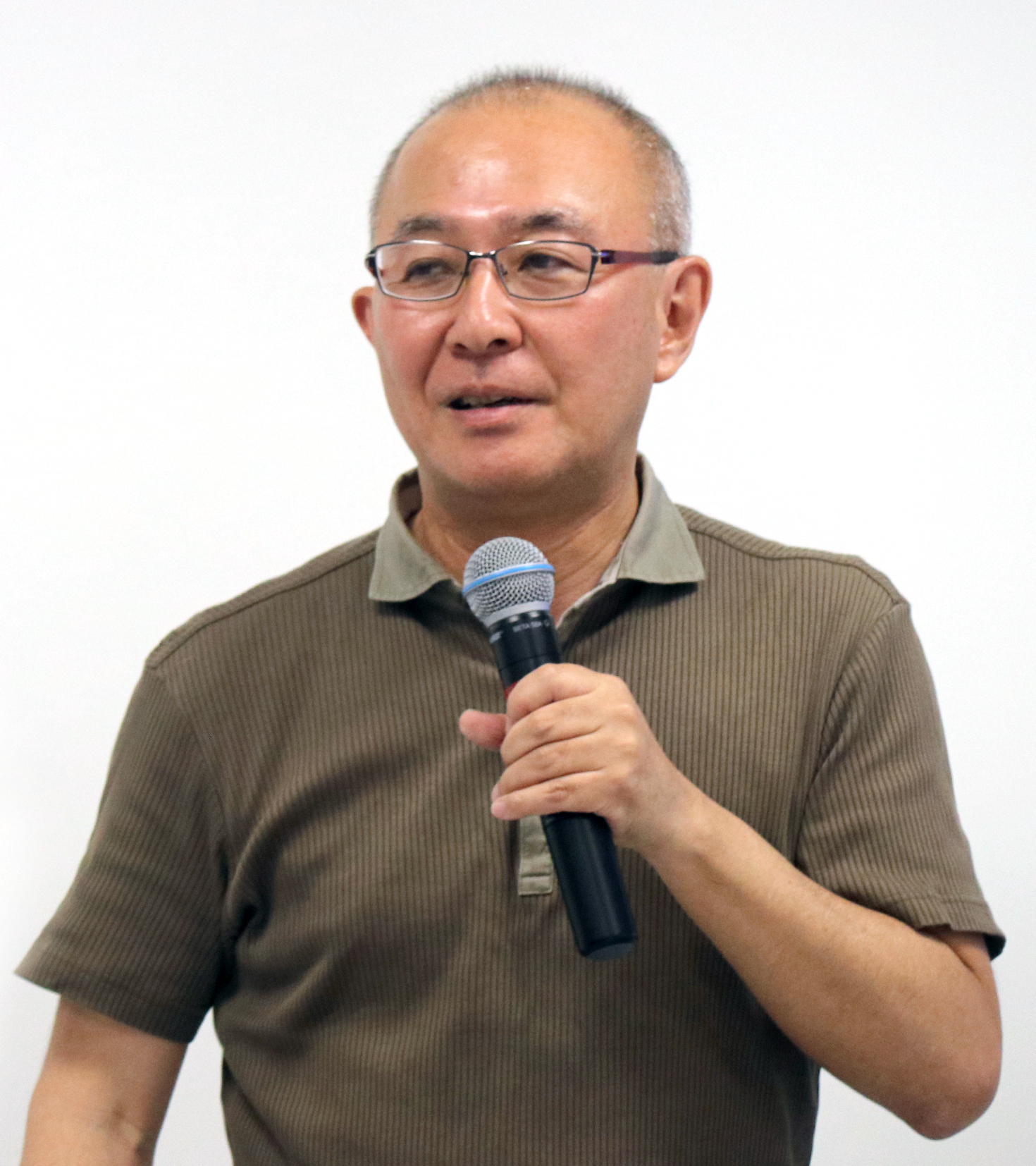
Title of seminar: Generalised hydrodynamics for integrable and quasi-integrable gases
Abstract:
I will review the theory of generalised hydrodynamics (GHD) for integrable quantum gases, with a particular emphasis on the impact of integrability-breaking perturbations and the emergence of long-range correlations during the dynamics even when integrability is broken.
11 Feb 2026
11h00
Vanderlei Bagnato, Professor at USP in São Carlos, Brazil
Title of seminar: Stages of the relaxation for a far-from-equilibrium trapped superfluid
Abstract:
Understanding the initial conditions that drive many-body quantum systems out of equilibrium is essential for getting into their thermalization dynamics. In this work [1,2,3], we identify two excitation regimes that lead a trapped Bose–Einstein condensate into turbulence regime evolving resulting in distinct final states. In the subcritical regime, the condensate partially reemerges after turbulence, whereas in the supercritical regime it dissolves completely into a thermal state. Despite these differences, both cases exhibit relaxation stages with common features: a direct energy cascade, the emergence of a nonthermal fixed point (characterized by identical scaling exponents), a prethermalization plateau, and eventual thermalization. Our results show that turbulence relaxation develops independently of the system’s initial conditions or its ultimate state. At late times, both regimes display universal scaling dynamics consistent with predictions from wave turbulence theory. Finally, by analyzing the time evolution of the condensate’s momentum distribution center of mass, we demonstrate how kinetic-energy dominance reflects the thermalized nature of the final states in each regime. The present results advance the field by showing that thermalization in far-from-equilibrium quantum systems follows universal relaxation dynamics, even when the final states differ, thereby deepening our understanding of the time evolution of many-body quantum systems. We shall present a new possible interpretation for pre-thermalization as well as an analysis of the construction of the coherent length during the last stage of thermalization of the system.
M. A. Moreno-Armijos et al – Phys. Rev. Lett. 134. 023401 (2025)
L. Madeira et al – Proc. Nat, Acad. Sci. -PNAS 121, 24044828121 (2024)
A. D. García-Orozco et al – Phys. Rev. A 106, 023314(2022)
8 Nov 2024
11h00
Clara Zyskind, PhD student at LNE-SYRTE in Paris
Title of seminar: An optical lattice clock with a bosonic isotope of mercury
Abstract:
Among other neutral species, mercury has interesting properties for an optical lattice clock such as a low sensitivity to blackbody radiation (16 times lower than Yb, 30 times lower than Sr) and a high vapour pressure at room temperature. So far, the 199Hg fermionic isotope was the only isotope used in a mercury clock, but its limited lifetime in the excited state will prevent to fully exploit the new generation of ultrastable lasers to come. Using bosonic isotopes instead is a way to bypass this limit thanks to a potentially unlimited lifetime.
We report the first observation of the 198Hg bosonic transition in an optical lattice clock, which results from several key experimental developments and a challenging search of a narrow transition in a wide uncertainty span.
The bosonic clock transition is forbidden and needs to be induced thanks to a high magnetic field. This is the so called quenching method1. It allows longer probing times, adjustable to the laser properties. Hence, a first key step was developing a setup to produce a large enough magnetic field to induce the bosonic transition with the highest coupling achievable. Another challenge was implementing a widely tunable and flexible probe laser while maintaining the ultra-low noise properties, in order to probe any of the mercury isotopes with no additional noise. The coupling is also increasing with the probe power, so a major step was to significantly increase our deep UV ultrastable light power.
Given all these experimental advances, we calculated that we still had a relatively weak coupling and hence a narrow line transition to be found in a large frequency span. We performed various measurements and checks thanks to the 199Hg isotope, especially a substantial alignment work, to optimize our chances to find the transition. Thanks to cumulated efforts, the search of the 198Hg transition was a success, making it the first observation of a mercury bosonic isotope transition.
Fig. 1: First direct observation of the 198Hg bosonic clock transition in an optical lattice.
We further obtained an operational optical lattice clock with the bosonic 198Hg, already reaching a stability of 10-15 at 1 second. We have undertaken several studies of this new transition, in particular we measured the quadratic Zeeman shift coefficient with an uncertainty suitable to control this shift to 10-17 or better. We also started studying other systematic effects such as the probe light shift and measuring the magic wavelength. Finally, we are working towards measuring, for the first time, the 198Hg/87Sr optical frequency ratio.
1 A. V. Taichenachev et al., “Magnetic Field-Induced Spectroscopy of Forbidden Optical Transitions with Application to Lattice-Based Optical Atomic Clocks”, Phys. Rev. Lett., vol. 96(8), p.083001, 2006.
4 Oct 2024
11 AM
Patricia Castilho – Instituto de Física de São Carlos/USP, Brasil
Title of seminar: Fast compression of a Bose-Einstein condensate and the new experiment for 2D Bose gases
Abstract:
In this seminar, I will first present the latest results on the evolution of a Bose-Einstein condensate after an abrupt compression where our preliminary analysis indicates an enhanced three-body losses.
Next, I will focus on describing a new experimental setup which aims to produce a 2D Bose gas of potassium-39 and explore the dynamics of quantum vortices in two dimensions.
27 Sep 2024
11h00
Frederic Grillot – Telecom Paris
Title of seminar: Mid- and Long-Wave Infrared Optoelectronics for Free-Space Optical Communications
Abstract:
Free-space optics offer an attractive alternative for broadband data transmission when fiber optics are neither practical nor feasible. This technology has emerged as a strong candidate with a wide range of potential applications from everyday broadband internet to satellite links. Today, the availability of high-quality transmitters and detectors operating in the near-infrared window makes the 1.55-micron optical wavelength the natural choice for free-space optical systems. However, the atmospheric transmission spectrum has two other transparency windows that can be considered namely one between 3 and 5 microns and the other between 8 and 11 microns. In this context, midinfrared quantum cascade devices have become prime candidates for data transmission applications, especially in fog or haze, where they significantly outperform near-infrared and visible light sources. In addition, atmospheric turbulence in the propagation path severely degrades the optical signal by causing beam spreading and wandering, scintillation or loss of spatial coherence. In this seminar, I will review our recent results on free-space optical communications, which have shown that quantum cascade lasers can be used as unpredictable light sources for data security, using complex photonic chaos for message encryption and synchronized chaos for message transmission. Between 8 and 11 microns, this technology is even more interesting because the random thermal background radiation of the blackbody further complicates the task of deciphering a potential spy, meaning that communication is even more secure. My presentation will also cover our recent advances in multi-gigabit-per-second room temperature data transfer based on midinfrared quantum optoelectronics. While these results can profoundly revolutionize the future of free-space laser communications, the goal, however, will be to implement this new optoelectronic technology in an actual outdoor testbed, especially to prove the superiority of the mid and long wave infrared domains.
26 Sep 2024
11 AM
Makoto Tsubota – Osaka Metropolitan University, Osaka, Japan
Quantum hydrodynamics and turbulence in atomic BECs
Quantum hydrodynamics and turbulence [1] have been long studied in superfluid helium since 1950’s, and in atomic Bose-Einstein condensates (BECs) too. In this talk, I would discuss the important topics of atomic BECs.
Introduction
We will overview briefly characteristics of quantum hydrodynamics and turbulence compared with those of classical turbulence.
Single-component BECs
Turbulence likes isotropy [2] and rotation causes anisotropy. Such competition of two contradictory effects has been studied in classical turbulence [3]. Rotation in a quantum fluid forms a vortex lattice along the rotational axis and gives other interesting effects. There are not so many experimental works [4-6] on rotating quantum turbulence, and theoretical numerical studies are also limited [7]. I will discuss rotating quantum turbulence of BECs [8].
Pour offrir les meilleures expériences, nous utilisons des technologies telles que les cookies pour stocker et/ou accéder aux informations des appareils. Le fait de consentir à ces technologies nous permettra de traiter des données telles que le comportement de navigation ou les ID uniques sur ce site. Le fait de ne pas consentir ou de retirer son consentement peut avoir un effet négatif sur certaines caractéristiques et fonctions.
Fonctionnel
Always active
Le stockage ou l’accès technique est strictement nécessaire dans la finalité d’intérêt légitime de permettre l’utilisation d’un service spécifique explicitement demandé par l’abonné ou l’utilisateur, ou dans le seul but d’effectuer la transmission d’une communication sur un réseau de communications électroniques.
Préférences
Le stockage ou l’accès technique est nécessaire dans la finalité d’intérêt légitime de stocker des préférences qui ne sont pas demandées par l’abonné ou l’utilisateur.
Statistiques
Le stockage ou l’accès technique qui est utilisé exclusivement à des fins statistiques.Le stockage ou l’accès technique qui est utilisé exclusivement dans des finalités statistiques anonymes. En l’absence d’une assignation à comparaître, d’une conformité volontaire de la part de votre fournisseur d’accès à internet ou d’enregistrements supplémentaires provenant d’une tierce partie, les informations stockées ou extraites à cette seule fin ne peuvent généralement pas être utilisées pour vous identifier.
Marketing
Le stockage ou l’accès technique est nécessaire pour créer des profils d’utilisateurs afin d’envoyer des publicités, ou pour suivre l’utilisateur sur un site web ou sur plusieurs sites web ayant des finalités marketing similaires.