

Vortices in liquid He, energy spectrum of quantum turbulence, quantum turbulence in atomic BECs
Following last week’s seminar, I will talk about quantum hydrodynamics and turbulence [1]. I will discuss important issues
by referring to both superfluid helium and atomic BECs.
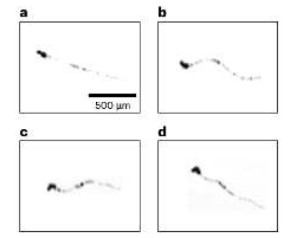
- 1.Visualization of quantized vortices in superfluid 4He: A major recent development in the field of superfluid helium has been brought about by visualization experiments. The group led by Lathrop succeeded in visualizing quantized vortices using solid hydrogen particles [2], and subsequently in observing their reconnections. Minowa et al. employed silicon particles generated by laser ablation to achieve the direct excitation of Kelvin waves and to observe their three-dimensional helical structure [3]. Furthermore, through measurements of the chirality and propagation direction of Kelvin waves, they succeeded for the first time in identifying the orientation of vorticity in quantized vortices.
- Energy spectrum of quantum turbulence Turbulence is not merely a disordered arrangement of vortices; rather, the confirmation of statistical laws such as the Kolmogorov law provides crucial evidence. The energy spectrum of quantum turbulence (QT) within the Gross–Pitaevskii (GP) equation framework was first investigated by Brachet and collaborators. As in the case of atomic BECs, the GP equation
describes a compressible fluid, and thus the energy spectrum must be decomposed into an incompressible component due to quantized vortices and a compressible component due to phonons. Starting from a Taylor–Green vortex, they studied decaying QT and demonstrated
that the incompressible spectrum exhibits a −5/3 scaling during the decay process [4]. Subsequently, Kobayashi and Tsubota introduced large-scale forcing and small-scale dissipation into the GP equation to generate steady-state QT, and confirmed that the incompressible spectrum follows the −5/3 law in this regime [5].
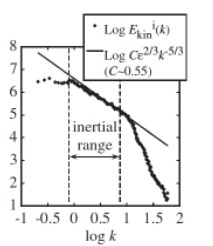
of QT by the GP model
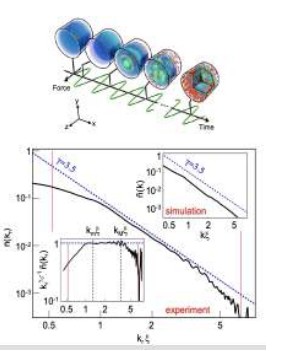
- . Quantum turbulence in atomic BECs Because an atomic BEC is a finite system confined by a trapping potential, QT cannot be generated simply by driving flow as in superfluid 4He. Instead, several methods have been proposed to create QT, including manipulations of the trapping potential. Kobayashi and Tsubota demonstrated that biaxial rotation of a BEC can induce turbulence [6], and, building on this idea, Bagnato et al. succeeded in realizing and observing three-dimensional QT through controlled modifications of the trapping potential [7]. Two-dimensional QT has also been realized [8]. However, these remain finite trapped systems with only a limited number of vortices. For turbulence, the verification of statistical laws is desirable, but such observations were hampered by the nonuniform density of the trapped gas. Recently, however, Navon et al. created turbulence in a BEC confined by a box potential, succeeded in demonstrating a power-law density spectrum [9], and observed a cascade of excitations flowing from low to high wave numbers [10].
[1] M. Tsubota, K. Kasamatsu, Quantum Hydrodynamics and Turbulence (Oxford Univ. Press) (2025).
[2] G. P. Bewley et al. Nature 441, 588(2006).
[3] Y. Minowa, Y. Yasui, T. Nakagawa, S. Inui, MT, M. Ashida, Nat. Phys. 233, 21(2025).
[4] C. Nore, M. Abid, and M. E. Brachet, Phys. Rev. Lett. 78,3896 (1997); Phys. Fluids 9, 2644 (1997).
[5] M. Kobayashi, MT, Phys. Rev. Lett. 94, 065302(2005); J. Phys. Soc. Jpn. 74, 3248(2005).
[6] M. Kobayashi, MT, Phys. Rev. A76, 045603(2007).
[7] E. A. L. Henn et al. , Phys. Rev. Lett. 103, 045301 (2009).
[8] K. E. Wilson et al., Annu. Rev. Cold At. Mol. 1, 261 (2013) : W. J. Kwon et al., Phys. Rev. A 90, 063627 (2014).
[9] N. Navon, A. L. Gaunt, R. P. Smith, Z. Hadzibabic, Nature 539, 72 (2016)
[10] N. Navon, C. Eigen, J. Zhang, R. Lopes, A. L. Gaunt, K. Fujimoto, MT, R. P. Smith, Z. Hadzibabic, Science 366, 382 (2019)